Title: What Is The Story About King Midas?
Subtitle: The Myth of the Golden Touch
Introduction
King Midas was a wealthy and powerful ruler of Phrygia, a region in ancient Anatolia. He was also a greedy and foolish man. One day, while traveling through the forest, Midas came across Silenus, the drunken companion of the god Dionysus. Midas took pity on Silenus and brought him back to his palace, where he was entertained and cared for.
When Dionysus came to reclaim Silenus, he was so grateful to Midas for his kindness that he offered him any gift he desired. Midas, without thinking, wished that everything he touched would turn to gold. Dionysus granted his wish, but Midas soon realized that his gift was actually a curse.
At first, Midas was overjoyed. He touched everything in sight, transforming it into precious gold. But then he began to realize the consequences of his wish. His food turned to gold, so he could not eat. His drink turned to gold, so he could not drink. His daughter, Marigold, ran to greet him, but Midas accidentally touched her and she turned into a golden statue.
Midas was devastated. He begged Dionysus to take back his gift, but the god refused. Midas wandered through his palace, surrounded by all his wealth, but he was miserable. He had everything he could ever want, but he could not enjoy it.
Finally, Midas realized that he had been wrong to wish for the golden touch. He had learned a valuable lesson about the importance of moderation and the dangers of greed.
The Story of King Midas
The story of King Midas is a cautionary tale about the dangers of greed. It teaches us that it is important to be careful what we wish for, and that true happiness cannot be found in material possessions.
The story also has a deeper meaning. It can be seen as a metaphor for the human soul. Midas's golden touch represents our desire for material possessions and worldly pleasures. But when we are consumed by greed, we lose sight of what is truly important in life. We lose our loved ones, our health, and our happiness.
The Meaning of the Myth
The myth of King Midas is one of the most enduring and popular myths in Greek mythology. It has been told and retold for centuries, and it continues to be relevant today.
The story teaches us a valuable lesson about the importance of moderation and the dangers of greed. It reminds us that true happiness cannot be found in material possessions.
The myth also has a deeper meaning. It can be seen as a metaphor for the human soul. Midas's golden touch represents our desire for material possessions and worldly pleasures. But when we are consumed by greed, we lose sight of what is truly important in life. We lose our loved ones, our health, and our happiness.
The Midas Touch in the Modern World
The phrase "the Midas touch" is still used today to describe someone who is very successful. However, it is important to remember that Midas's success was ultimately his undoing. His greed led to his misery and the loss of the things he loved most.
In the modern world, we are constantly bombarded with messages that tell us that we need to have more and more things in order to be happy. We are encouraged to buy new clothes, new gadgets, and new cars. But the truth is that true happiness cannot be found in material possessions.
We need to learn from the story of King Midas and be careful what we wish for. We need to remember that true happiness comes from within, not from the things we own.
Other Interpretations of the Myth
There are many different interpretations of the myth of King Midas. Some people believe that it is a story about the dangers of hubris, or excessive pride. Others believe that it is a story about the importance of humility and compassion. Still others believe that it is a story about the power of transformation.
No matter how you interpret it, the myth of King Midas is a powerful and enduring story that has something to teach us all.
The Myth of King Midas in Popular Culture
The myth of King Midas has been adapted and retold many times in popular culture. It has been featured in books, movies, TV shows, and even video games.
One of the most famous adaptations of the myth is the 1957 film The Golden Touch, starring James Mason and Midas. The film tells the story of Midas as a greedy and selfish man who learns a valuable lesson about the importance of what is truly important in life.
Another popular adaptation of the myth is the 1970s
WebTales from Ancient Greece. Ancient Greek mythology. KS2. King Midas is granted his wish for everything he touches to be turned to gold. BBC School Radio. BBC Teach. WebMidas was a mythical king of Phrygia, a kingdom in the west central part of Anatolia (now in modern-day Turkey). How he came to acquire his fabled 'Midas touch' or 'golden touch'. WebIn Greek mythology, King Midas is known as a rogue ruler whose antics bemused his people and irritated the Gods. Many know the classic story of Midas's golden touch, but the. WebMidas was the king of Phrygia, who ruled over his people from a lavish castle encircled by a beauteous garden, in which – to quote history's first historian, Herodotus – "roses grow of.
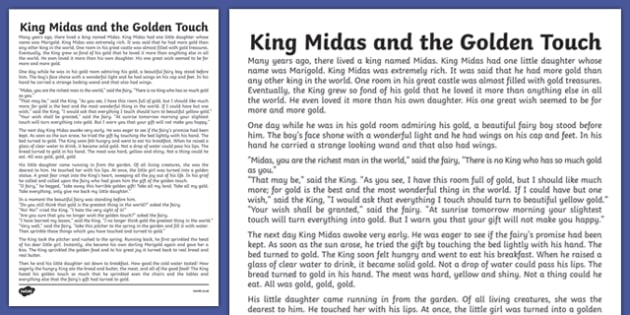
King Midas Story Print Out (teacher made) - Twinkl
Source: twinkl.com.sg
File:A Short Depiction of King Midas And the Golden Touch.png - Wikimedia Commons

Source: Wikimedia Commons
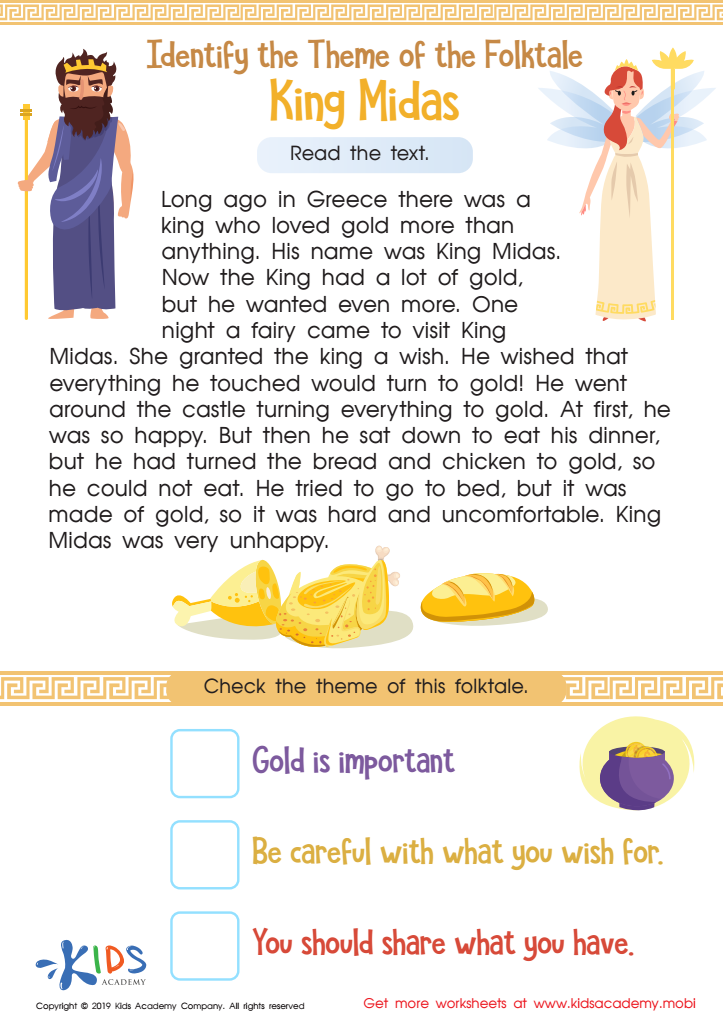
King Midas Worksheet for kids
Source: kidsacademy.mobi
What Is The Story About King Midas, The myth of King Midas and his golden touch - Iseult Gillespie, 6.98 MB, 05:05, 6,919,392, TED-Ed, 2018-03-05T16:08:59.000000Z, 2, King Midas Story Print Out (teacher made) - Twinkl, twinkl.com.sg, 315 x 630, jpg, , 3, what-is-the-story-about-king-midas
What Is The Story About King Midas. WebThe Real King Midas. King Midas of Phrygia is a familiar figure in Greek mythology, but he may have been based on an actual late-8th century BCE ruler known.
Check out our Patreon page: patreon.com/teded
View full lesson: ed.ted.com/lessons/the-myth-of-king-midas-and-his-golden-touch-iseult-gillespie
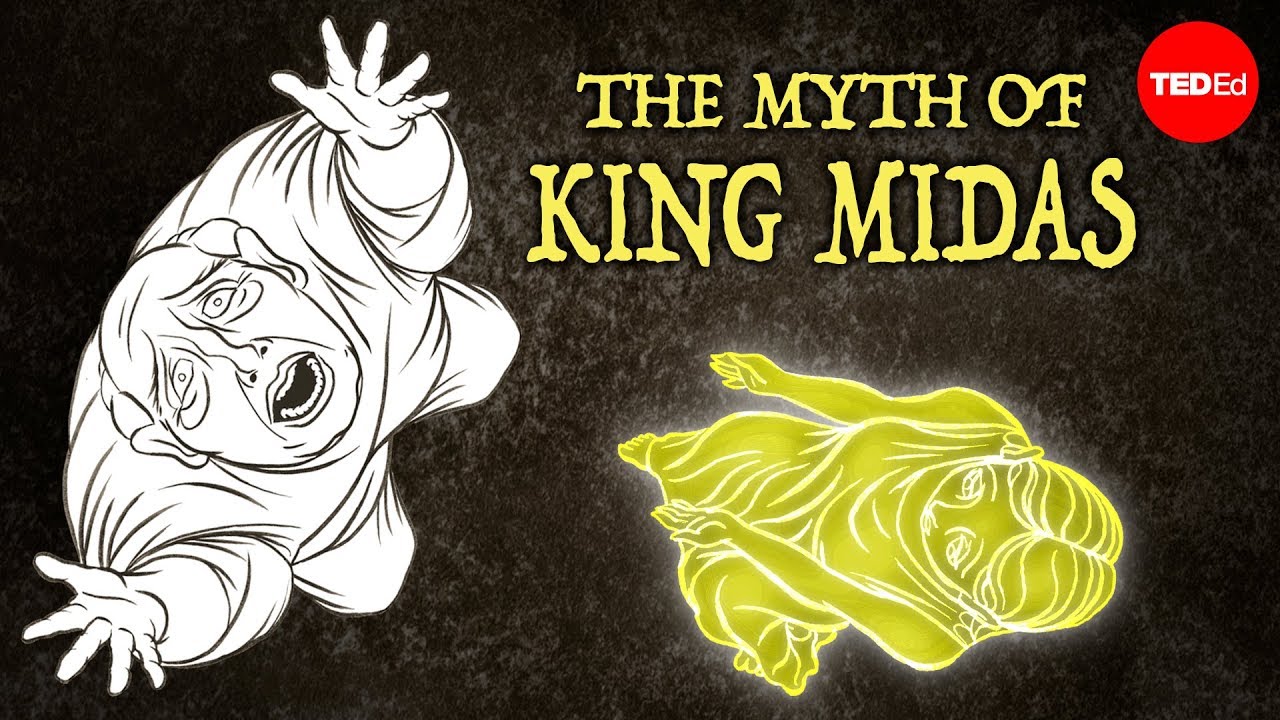
In Greek mythology, King Midas is known as a rogue ruler whose antics bemused his people and irritated the Gods. Many know the classic story of Midas's golden touch, but the foolish king was also known for his unusual pair of ears. Iseult Gillespie shares the myth of King Midas.
Lesson by Iseult Gillespie, animation by TED-Ed.
Thank you so much to our patrons for your support! Without you this video would not be possible! Milad Mostafavi, Rob Johnson, Singh Devesh Sourabh, Ashley Maldonado, Clarence E. Harper Jr., Bojana Golubovic, Mihail Radu Pantilimon, Sarah Yaghi, Benedict Chuah, Karthik Cherala, haventfiguredout , Violeta Cervantes, Elaine Fitzpatrick, Lyn-z Schulte, Sharon Chou, Henrique 'Sorín' Cassús, Tim Robinson, Kiarash Asar, Jun Cai, Paul Schneider, Amber Wood, Ophelia Gibson Best, Cas Jamieson, Michelle Stevens-Stanford, Phyllis Dubrow, Andreas Voltios, Aliyya Rachmadi, Eunsun Kim, Philippe Spoden, Samantha Chow, Armando Ello, Ayala Ron, Manognya Chakrapani, Simon Holst Ravn, Doreen Reynolds-Consolati, Rakshit Kothari, Melissa Sorrells, Antony Lee, Husain Mohammad, Dino Hrnjić, Max Shuai Tang, Côme Vincent, Astia Rizki Safitri, Alan Froese, alessandra tasso, Jamerson Chingapanini, Gerald Onyango, Dalton Valette, Katrina Harding, Ezgi Yersu, Al the Scottish Wildcat, Katie Dean, Kin Lon Ma, Carsten Tobehn, Boris Langvand, Jeremy Fryd, and Charlene You.
King Midas Story Print Out (teacher made) - Twinkl
What Is The Story About King Midas, WebMidas was the king of Phrygia, who ruled over his people from a lavish castle encircled by a beauteous garden, in which – to quote history's first historian, Herodotus – "roses grow of.
The myth of King Midas and his golden touch - Iseult Gillespie
Source: Youtube.com
King Midas and the Golden Touch - A Greek Tale

Source: Youtube.com
hs › king-midasMyth of King Midas and his golden touch - Greek Myths | Greeka
The story of King Midas is a myth about the tragedy of avarice and narrates what happens when true happiness is not recognized. Midas was a man who wished that everything he touched would turn into gold. However, he had not thought that this wish was not actually a blessing, but a curse. .
.
.
.
.
tory-of-king-midasKing Midas in Greek Mythology: The Complete Guide
Mike Greenberg, PhD Published on March 8, 2021 Although his legend is famous, King Midas was not known in Greek mythology. Instead, it was Greek historians who mentioned the king of Phrygia and his immense wealth. They saw Midas not as a legendary figure, but as a historical king of a foreign land. .
.
.
.
.
.
idasMidas - Wikipedia
[10] Arrian gives an alternative story of the descent and life of Midas. According to him, Midas was the son of Gordios, a poor peasant, and a Telmissian maiden of the prophetic race. .
ths › MortalsKing Midas - Greek Mythology
Midas was the king of Phrygia, who ruled over his people from a lavish castle encircled by a beauteous garden, in which – to quote history's first historian, Herodotus – "roses grow of themselves, each bearing sixty blossoms and of surpassing fragrance." King Midas with Silenus .
.
› Midas-Greek-mythologyMidas | King of Phrygia, Golden Touch | Britannica
On the Web: Midas, in Greek and Roman legend, a king of Phrygia, known for his foolishness and greed. The stories of Midas, part of the Dionysiac cycle of legends, were first elaborated in the burlesques of the Athenian satyr plays. The tales are familiar to modern readers through the late classical versions, such as those in Ovid's , .


0 Comments