
Translation is the communication of the meaning of a source-language text by means of an equivalent target-language text. The English word "translation" derives from the Latin word "translatio", meaning "carrying across".
Translation has been around for as long as different languages have existed. The earliest known translations are from ancient Mesopotamia, where cuneiform texts were translated from Sumerian to Akkadian and vice versa.
Translation has played an important role in the development of human civilization. It has allowed people from different cultures to communicate with each other and share their knowledge and ideas. Translation has also been used to spread religion and to promote trade and commerce.
In the modern world, translation is more important than ever before. Due to globalization, people are increasingly interacting with people from other cultures and speaking other languages. Translation is essential for communication in business, government, education, and other fields.
The history of translation
The history of translation can be traced back to ancient Mesopotamia, where cuneiform texts were translated from Sumerian to Akkadian and vice versa. Other early translations include the Septuagint, a Greek translation of the Hebrew Bible, and the Vulgate, a Latin translation of the Bible.
Translation flourished in the Middle Ages, when Arabic translators translated Greek and Latin texts into Arabic. This led to the spread of knowledge from the ancient world to the Islamic world.
The Renaissance saw a renewed interest in translation, as scholars sought to translate ancient Greek and Latin texts into their own languages. This led to the translation of many important works of literature and philosophy, such as the works of Plato, Aristotle, and Homer.
Translation continued to grow in importance in the modern era, as European powers expanded their empires around the world. Translation was used to communicate with colonized peoples and to spread European culture and values.
In the 20th century, translation became even more important due to the rise of international organizations such as the United Nations and the European Union. Translation is now essential for communication in these and other international organizations.
The different types of translation
There are many different types of translation, each with its own specific challenges. Some of the most common types of translation include:
- Literary translation: The translation of works of literature, such as novels, poems, and plays.
- Technical translation: The translation of technical documents, such as manuals, patents, and scientific papers.
- Commercial translation: The translation of commercial documents, such as contracts, invoices, and marketing materials.
- Legal translation: The translation of legal documents, such as contracts, laws, and court records.
- Medical translation: The translation of medical documents, such as medical records, research papers, and patient information.
- Government translation: The translation of government documents, such as laws, treaties, and reports.
The challenges of translation
Translation is a complex and challenging task. Translators must have a deep understanding of both the source and target languages, as well as the subject matter of the text being translated. They must also be able to convey the meaning of the original text in a way that is both accurate and culturally appropriate.
Some of the challenges of translation include:
- Ambiguity: Many words and phrases have multiple meanings. Translators must carefully choose the correct meaning based on the context of the text.
- Cultural differences: Different languages have different cultures. Translators must be aware of these cultural differences and avoid translating in a way that is offensive or insensitive.
- Technical terminology: Translators must be able to accurately translate technical terminology into the target language.
The importance of translation
Translation is essential for communication in today's globalized world. It allows people from different cultures to communicate with each other and share their knowledge and ideas. Translation is also used to spread religion and to promote trade and commerce.
The future of translation
Translation is a growing field, and the demand for translation services is expected to increase in the coming years. This is due to the increasing globalization of the economy and the growing number of people who are learning foreign languages.
There are a number of new technologies that are being developed to help translators with their work. These technologies include machine translation, which uses artificial intelligence to translate text from one language to another. Machine translation is still under development, but it is becoming increasingly accurate and is already being used by some translators.
Conclusion
Translation is a complex and challenging task, but it is also an essential one. It allows people from different cultures to communicate with each other and share their knowledge and ideas. Translation is also used to spread religion and to promote trade and commerce.
The future of translation is bright. The demand for translation services is expected to increase in the coming years, and new technologies are being developed to help translators with their work.
**HTML format and HTML tags without , and
WebTranslate documents. You can translate documents up to 10 MB in any of these formats: .docx, .pdf, .pptx, .xlsx. PDF files must be 300 pages or less. To translate more. WebBy the Google Translate team. Highlight or right-click on a section of text and click on Translate icon next to it to translate it to your language. Or, to translate the entire. Webaccuracy in translating short story. The first instrument is document by the translation test. The reason why the researcher used a test as instrument was that through translation. WebYou can use the Google Translate app to translate written words or phrases. You can also use Google Translate in a web browser like Chrome or Firefox. Learn more about. WebLast update:6 June 2023. As part of its effort to support learning continuity during the COVID-19 pandemic, UNESCO launched the Translate a Story initiative. The. Webnoun. / ˈstoːri/. plural stories. Add to word list. an account of an event, or series of events, real or imaginary. cerita. the story of the disaster. the story of his life. He went to the.
How to translate a story | Help Section
Source: prezly.com
Translate a story: a book translation campaign to promote early age reading during COVID-19 crisis

Source: unesdoc.unesco.org
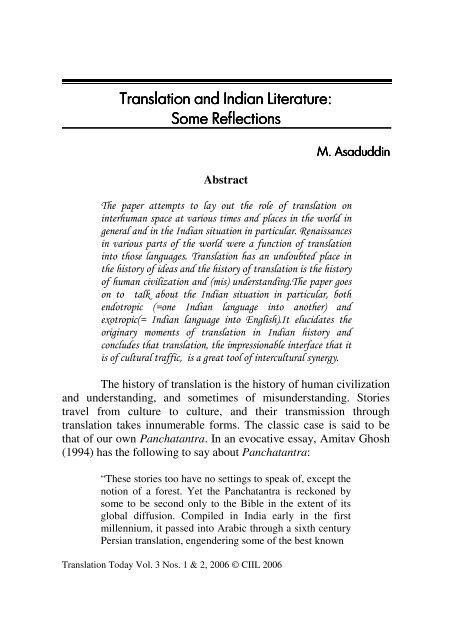
Translation and Indian Literature - National Translation Mission
Source: yumpu.com
What Is The Story About Translate, Google Translate: Alberto's Story, 2.77 MB, 02:01, 1,429,066, Google, 2015-10-19T16:01:46.000000Z, 2, How to translate a story | Help Section, prezly.com, 499 x 829, jpg, , 3, what-is-the-story-about-translate
What Is The Story About Translate. WebLayanan Google yang ditawarkan tanpa biaya ini dapat langsung menerjemahkan berbagai kata, frasa, dan halaman web ke bahasa Indonesia dan lebih dari 100 bahasa lainnya.
With a little help from #GoogleTranslate, the language barrier was no match for Alberto and his football coaches. Google Translate is available on Android ( goo.gl/translateappandroid ) and iOS ( goo.gl/translateappios). #VamosAlberto
How to translate a story | Help Section
What Is The Story About Translate, WebYou can use the Google Translate app to translate written words or phrases. You can also use Google Translate in a web browser like Chrome or Firefox. Learn more about. WebLast update:6 June 2023. As part of its effort to support learning continuity during the COVID-19 pandemic, UNESCO launched the Translate a Story initiative. The. Webnoun. / ˈstoːri/. plural stories. Add to word list. an account of an event, or series of events, real or imaginary. cerita. the story of the disaster. the story of his life. He went to the.
Google Translate: Alberto's Story

Source: Youtube.com
Google Translate: Mr. Xu's Story

Source: Youtube.com
le TranslateTranslateSearch
Google's service, offered free of charge, instantly translates words, phrases, and web pages between English and over 100 other languages.Google's service, offered free of charge, instantly,Search the world's information, including webpages, images,... .
.
.
.
.
› blog › history-ofThe History Of Translation | Language Connections
Some of The Early History of Translation. Translation services were very common throughout Ancient societies in the Middle East, and the abundance of languages between ancient kingdoms developed the need for people to communicate through language barriers. At around 2500 BC, clay tablets were used to decipher symbols from Sumerian and Eblaite , .
ranslationTranslation - Wikipedia
Machine translation (MT) is a process whereby a computer program analyzes a source text and, in principle, produces a target text without human intervention. In reality, however, machine translation typically does involve human intervention, in the form of pre-editing and post-editing. [95] .
.
.
.
.
history-of-translationThe History of Translation - Key Facts, Legends, Theories ...
.
page-turnerThe Book That Taught Me What Translation Was | The New Yorker
Translation, too, is a dynamic and dramatic transformation. Word for word, sentence for sentence, page for page, a text conceived and written and read in one language comes to be reconceived , .
.
anslateTen years of Google Translate - The Keyword
.


0 Comments